 Login / Register


 United States ($) USD
 Austria (€) EUR
 Belgium (€) EUR
 Denmark (DKK) DKK
 Finland (€) EUR
 France (€) EUR
 Germany (€) EUR
 Ireland (€) EUR
 Japan (¥) JPY
 Luxembourg (€) EUR
 Netherlands (€) EUR
 Norway (NOK) NOK
 Sweden (SEK) SEK
 Switzerland (CHF) CHF
 United Kingdom (£) GBP

- Clone
- L276F12 (See other available formats)
- Regulatory Status
- RUO
- Other Names
- Fusin, LESTR, Sdf1r, Cmkar4, PB-CKR, PBSF/SDF-1
- Isotype
- Rat IgG2b, κ
- Ave. Rating
- Submit a Review
- Product Citations
- publications

-

C57BL/6 mouse thymocytes were stained with anti-mouse CD4 (clone GK1.5) APC and anti-mouse CD184 (CXCR4) (clone L276F12) StarBright UltraViolet 740 (left) or stained with anti-mouse CD4 (clone GK1.5) APC only (right).
| Cat # | Size | Price | Quantity Check Availability | Save | ||
|---|---|---|---|---|---|---|
| 146533 | 150 μg | SEK2672 | ||||
This StarBright conjugate is available for purchase as part of a multicolor flow cytometry panel. To order, add compatible products to your shopping cart, or use our Panel Selector tool to build your ideal panel. For ordering assistance or to request a sample, contact your local field representative.
This product is also available for direct purchase within a StarBright Basic Panel, which combines a minimal set of pre-selected compatible reagents.
CD184, also known as CXCR4, is a member of the G protein coupled receptor family that binds CXCL12 (SDF1). CXCR4 and CXCL12 play an important role in immune and inflammatory responses through the regulation of cell migration and growth. CXCR4 plays a crucial role in the pathogenesis of several autoimmune diseases such as atherosclerosis, rheumatoid arthritis, and wound healing. In addition, CXCR4 is the cofactor for fusion and entry of the T cell-tropic form of HIV-1.
Product DetailsProduct Details
- Verified Reactivity
- Mouse
- Antibody Type
- Monoclonal
- Host Species
- Rat
- Immunogen
- Mouse CXCR4-transfected cells
- Formulation
- Phosphate-buffered saline, containing 0.09% sodium azide, 0.05% Tween 20, 0.1% PEG 3350, 0.1% Pluronic F68, and 1% BSA (origin USA)
- Preparation
- The antibody was purified by affinity chromatography and conjugated with StarBright UltraViolet 740 under optimal conditions.
- Concentration
- 0.6 mg/mL (the concentration relates to the dye component of the conjugate)
- Storage & Handling
- The antibody solution should be stored undiluted between 2°C and 8°C, and protected from prolonged exposure to light. Do not freeze.
- Application
-
FC - Quality tested
- Recommended Usage
-
Each lot of this antibody is quality control tested by immunofluorescent staining with flow cytometric analysis. For flow cytometric staining, the suggested use of this reagent is ≤ 0.5 µg per million cells in 100 µL volume. It is recommended that the reagent be titrated for optimal performance for each application.
* StarBright UltraViolet 740 has a maximum excitation of 343 nm and a maximum emission of 737 nm.
StarBright dyes are powered by Bio-Rad®. STARBRIGHT is a trademark of Bio-Rad Laboratories, Inc. - Excitation Laser
-
Ultraviolet Laser (355 nm)
- Application Notes
-
Additional reported applications (for the relevant formats) include: in vivo blocking1
- Application References
-
- Costa MJ, et al. 2018. PLoS One. 13:e0194688 (Block) PubMed
Antigen Details
- Structure
- G-protein-coupled seven transmembrane receptor, 39.7 kD
- Distribution
-
T lymphocytes, monocytes, macrophages, tissue-committed stem/progenitor cells (TCSCs), mast cells, vascular smooth muscle cells (VSMCs)
- Function
- Development of cardiovascular and central nervous system, hematopoiesis, and colonization of BM by fetal liver-derived hematopoietic stem cells (HSCs) during embryogenesis, homing and egress of CD34+ CXCR4+ progenitor cells from bone marrow, and their migration into peripheral tissues. Critical role in homing of cancer cells to specific metastatic sites. Possible role in the ubiquitin proteosome system.
- Interaction
- Robo -1
- Ligand/Receptor
- CXCL12 (SDF-1)
- Cell Type
- Macrophages, Mast cells, Mesenchymal Stem Cells, Monocytes, Neural Stem Cells, T cells
- Biology Area
- Angiogenesis, Cell Biology, Cell Motility/Cytoskeleton/Structure, Immunology, Neuroscience, Neuroscience Cell Markers, Signal Transduction, Stem Cells, Ubiquitin/Protein Degradation
- Molecular Family
- CD Molecules, Cytokine/Chemokine Receptors, GPCR
- Antigen References
-
1. Kucia M, et al. 2005. Stem Cells 23:879.
2. Muller A, et al. 2001. Nature 410:50.
3. Saini V, et al. 2010. J. Biol. Chem. 285:15566.
4. Prasad A, et al. 2007. J. Leuko. Biol. 82:465.
5. De Klerck B, et al. 2005. Arthritis Res. Ther. 7:R1208.
6. Rueda P, et al. 2008. PLoS One 3:e2543.
7. Feng Y, et al. 1996. Science 272:872. - Gene ID
- 12767 View all products for this Gene ID
- UniProt
- View information about CD184 on UniProt.org
Related Pages & Pathways
Pathways


Related FAQs
- What is a “StarBright panel”?
-
A StarBright panel is a multiplex panel that includes at least one StarBright conjugate.
- Will my StarBright panel be provided as a cocktail?
-
StarBright products purchased as part of a panel or StarBright Basic Panel will be provided in individual vials. To order premade cocktails, please contact our Custom Solutions Team.
- Are StarBright GMP/ASR products available?
-
StarBright ASR and GMP products are coming soon.
- Are StarBright custom products available?
-
Yes, please contact our Custom Solutions Team.
- Will StarBright isotype controls be offered?
-
We are not planning to offer StarBright isotype controls at this time. Fluorescence Minus One (FMO) controls should be used to define gating boundaries.
- What amount of a StarBright conjugate should I use?
-
Antibody conjugates should be titrated for optimal performance in each application. To directly compare performance with a traditional or polymer-conjugated antibody, we recommend using the same volume of each product for analysis. Due to differences in the quantification of product mass, StarBright Dyes are prepared in equivalent volumes.
- Why shouldn’t I compare the mass (μg) of a StarBright conjugate to a traditional or polymer conjugate?
-
For StarBright conjugates, the reported mass refers to the mass of the dye component. For traditional conjugates, the reported mass refers to the mass of the antibody component. This is because traditional conjugates have multiple dye molecules attached to one antibody, while StarBright conjugates have multiple antibodies attached to a single StarBright Dye.
Other Formats
View All CD184 Reagents Request Custom Conjugation| Description | Clone | Applications |
|---|---|---|
| Biotin anti-mouse CD184 (CXCR4) | L276F12 | FC |
| Brilliant Violet 711™ anti-mouse CD184 (CXCR4) | L276F12 | FC |
| Brilliant Violet 605™ anti-mouse CD184 (CXCR4) | L276F12 | FC |
| TotalSeq™-A0444 anti-mouse CD184 (CXCR4) | L276F12 | PG |
| Purified anti-mouse CD184 (CXCR4) | L276F12 | FC |
| Alexa Fluor® 647 anti-mouse CD184 (CXCR4) | L276F12 | FC |
| PE anti-mouse CD184 (CXCR4) | L276F12 | FC |
| APC anti-mouse CD184 (CXCR4) | L276F12 | FC |
| PerCP/Cyanine5.5 anti-mouse CD184 (CXCR4) | L276F12 | FC |
| Brilliant Violet 421™ anti-mouse CD184 (CXCR4) | L276F12 | FC |
| PE/Dazzle™ 594 anti-mouse CD184 (CXCR4) | L276F12 | FC |
| TotalSeq™-B0444 anti-mouse CD184 (CXCR4) | L276F12 | PG |
| APC/Cyanine7 anti-mouse CD184 (CXCR4) Antibody | L276F12 | FC |
| TotalSeq™-C0444 anti-mouse CD184 (CXCR4) | L276F12 | PG |
| KIRAVIA Blue 520™ anti-mouse CD184 (CXCR4) | L276F12 | FC |
| Brilliant Violet 785™ anti-mouse CD184 (CXCR4) | L276F12 | FC |
| Spark Red™ 718 anti-mouse CD184 (CXCR4) Antibody | L276F12 | FC |
| StarBright UltraViolet 740 anti-mouse CD184 (CXCR4) | L276F12 | FC |
Compare Data Across All Formats
This data display is provided for general comparisons between formats.
Your actual data may vary due to variations in samples, target cells, instruments and their settings, staining conditions, and other factors.
If you need assistance with selecting the best format contact our expert technical support team.
-
Biotin anti-mouse CD184 (CXCR4)
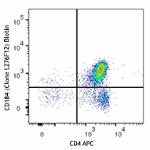
C57BL/6 mouse thymocytes were stained with biotinylated CXCR... 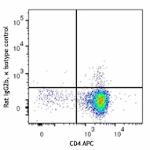
-
Brilliant Violet 711™ anti-mouse CD184 (CXCR4)
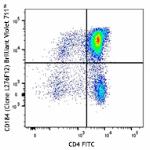
Mouse thymocytes stained with CD4 FITC and CD184 (clone L276... 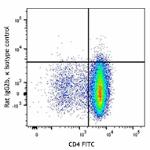
-
Brilliant Violet 605™ anti-mouse CD184 (CXCR4)
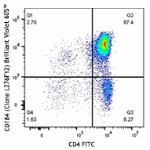
Mouse thymocytes stained with CD4 FITC and CD184 (clone L276... 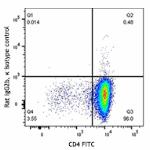
-
TotalSeq™-A0444 anti-mouse CD184 (CXCR4)
-
Purified anti-mouse CD184 (CXCR4)
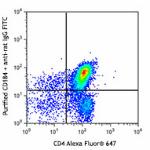
C57BL/6 mouse thymocytes were stained with purified CXCR4 (c... 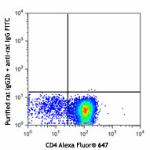
-
Alexa Fluor® 647 anti-mouse CD184 (CXCR4)
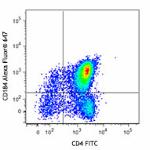
C57BL/6 mouse thymocytes were stained with CD4 FITC and CD18... 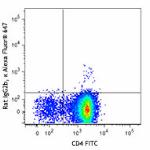
-
PE anti-mouse CD184 (CXCR4)
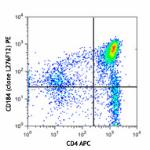
C57BL/6 mouse thymocytes were stained with CD4 APC and CD184... 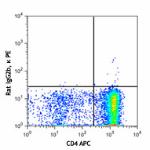
-
APC anti-mouse CD184 (CXCR4)
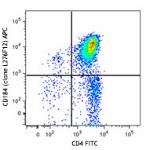
C57BL/6 mouse thymocytes were stained with CD4 FITC and CD18... 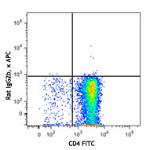
-
PerCP/Cyanine5.5 anti-mouse CD184 (CXCR4)
C57BL/6 mouse thymocytes were stained with CD4 APC and CD184... -
Brilliant Violet 421™ anti-mouse CD184 (CXCR4)
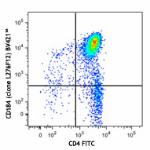
C57BL/6 mouse thymocytes were stained with CD4 FITC and CD18... 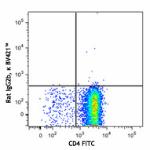
-
PE/Dazzle™ 594 anti-mouse CD184 (CXCR4)
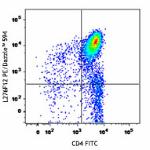
C57BL/6 mouse thymocytes were stained with CD4 FITC and CD18... -
TotalSeq™-B0444 anti-mouse CD184 (CXCR4)
-
APC/Cyanine7 anti-mouse CD184 (CXCR4) Antibody
C57BL/6 mouse thymocytes were stained with CD4 FITC and CD18... -
TotalSeq™-C0444 anti-mouse CD184 (CXCR4)
-
KIRAVIA Blue 520™ anti-mouse CD184 (CXCR4)

C57BL/6 mouse thymocytes were stained with anti-mouse CD4 (c... -
Brilliant Violet 785™ anti-mouse CD184 (CXCR4)

C57BL/6 mouse thymocytes were stained with anti-mouse CD4 (c... -
Spark Red™ 718 anti-mouse CD184 (CXCR4) Antibody

C57BL/6 mouse thymocytes were stained with anti-mouse CD4 (c... -
StarBright UltraViolet 740 anti-mouse CD184 (CXCR4)

C57BL/6 mouse thymocytes were stained with anti-mouse CD4 (c...


Follow Us