 Login / Register


 United States ($) USD
 Austria (€) EUR
 Belgium (€) EUR
 Denmark (DKK) DKK
 Finland (€) EUR
 France (€) EUR
 Germany (€) EUR
 Ireland (€) EUR
 Japan (¥) JPY
 Luxembourg (€) EUR
 Netherlands (€) EUR
 Norway (NOK) NOK
 Sweden (SEK) SEK
 Switzerland (CHF) CHF
 United Kingdom (£) GBP

- Clone
- D6E10 (See other available formats)
- Regulatory Status
- RUO
- Other Names
- Apolipoprotein E, apolipoprotein E3, AD2, LDLCQ5, LPG, ApoE
- Isotype
- Mouse IgG1, κ
- Ave. Rating
- Submit a Review
- Product Citations
- publications

-

IHC staining with Alexa Fluor® 647 anti-ApoE (clone D6E10) on formalin-fixed paraffin-embedded human Alzheimer’s Brain diseased cortex. Following antigen retrieval using 1X Tris-EDTA pH 9.0 Antigen Retrieval Buffer (Cat. No. 422704), the tissue was incubated without (panel A) and with (panel B) Alexa Fluor® 647 anti-ApoE (clone D6E10). Nuclei were counterstained with DAPI (Cat. No. 422801). Images were captured with a 40X objective and merged. Scale bar: 50 µm -

HeLa cells (negative cell line, panel A) and HepG2 cells (positive cell line, panel B) were fixed with 4% PFA Fixation Buffer (Cat. No. 420801) for 10 minutes, permeabilized with 100% ice-cold methanol for 10 minutes, and blocked with 5% FBS for 1 hour at room temperature. Cells were then stained with Alexa Fluor® 647 anti-ApoE (clone D6E10). Nuclei were counterstained with DAPI (Cat. No. 422801). The images were captured on a Revvity Operetta CLS™ High Content Analysis System with a 63X objective and merged. Scale bar: 50 µm
| Cat # | Size | Price | Quantity Check Availability | Save | ||
|---|---|---|---|---|---|---|
| 803309 | 25 µg | 156€ | ||||
| 803310 | 100 µg | 376€ | ||||
Apo-E is a class of apolipoprotein primarily synthesized in the liver, but is also found in other tissues such as brain, kidneys, and spleen. Apo-E is a protein component of serum chylomicron and lipoprotein particles, playing essential roles in cholesterol transportation, homeostasis, and metabolism. The expression of Apo-E is induced by cholesterol-rich diets and hyperlipoproteinemia. In the central nervous system, Apo-E is produced by astrocytes and microglia. The Apo-E-containing lipoprotein particles play important functions in brain injury repair, neurogenesis, and synaptic plasticity. Apo-E has been found to be involved in the regulation of amyloid-β aggregation and clearance. Genetic polymorphisms of Apo-E are associated with neuron degenerative disorders including Alzheimer's disease.
Product DetailsProduct Details
- Verified Reactivity
- Human
- Antibody Type
- Monoclonal
- Host Species
- Mouse
- Immunogen
- This antibody was raised against a peptide sequence corresponding to aa 141-160 of human Apo-E.
- Formulation
- Phosphate-buffered solution, pH 7.2, containing 0.09% sodium azide
- Preparation
- The antibody was purified by affinity chromatography and conjugated with Alexa Fluor® 647 under optimal conditions.
- Concentration
- 0.5 mg/mL
- Storage & Handling
- The antibody solution should be stored undiluted between 2°C and 8°C, and protected from prolonged exposure to light. Do not freeze.
- Application
-
IHC-P - Quality tested
ICC - Verified - Recommended Usage
-
Each lot of this antibody is quality control tested by formalin-fixed paraffin-embedded immunohistochemical staining. For immunohistochemistry, a concentration range of 5.0 - 10.0 µg/mL is suggested. For immunocytochemistry, a concentration range of 5.0 - 10.0 μg/mL is recommended. It is recommended that the reagent be titrated for optimal performance for each application.
* Alexa Fluor® 647 has a maximum emission of 668 nm when it is excited at 633 nm / 635 nm.
Alexa Fluor® and Pacific Blue™ are trademarks of Life Technologies Corporation.
View full statement regarding label licenses - Excitation Laser
-
Red Laser (633 nm)
- Additional Product Notes
-
For use in immunohistochemistry on formalin-fixed paraffin-embedded tissue (IHC-P), it is recommended to perform antigen retrieval using either Citrate Buffer, 10X (Cat. No. 420902) or Tris-EDTA pH 9.0 Antigen Retrieval Buffer (10X) (Cat. No. 422704).
For use in immunocytochemistry (ICC), it is recommended to fix/permeabilize with any of the following:
-100% ice-cold methanol only
-Fixation buffer (Cat. No. 420801) with 100% ice-cold methanol
Fixation/permeabilization using Fixation buffer (Cat. No. 420801) with 0.5 % Triton X-100 is not recommended. - Application References
-
- Munoz DG and Feldman H. 2000. CMAJ. 162(1):65-72.
- Hagberg JM, et al. 2000. Physiol Genomics. 4(2):101-108.
- Saunders AM. 2000. J Neuropathol Exp Neurol. 59(9):751-8.
- Golabek AA, et al. 2000. Biophys J. 79(2):1008-15.
- Zunarelli E, et al. 2000. Breast Cancer Res Treat. 63(3):193-8.
- Zunarelli E, et al. 2000. Clin Neuropathol. 19(1):1-6.
- Tomiyama T, et al. 1999. Cell Mol Life Sci. 6(3-4):268-79.
- Golabek AA., et al. 1996. J Biol Chem. 271(18):10602-6.
- RRID
-
AB_3720618 (BioLegend Cat. No. 803309)
AB_3720618 (BioLegend Cat. No. 803310)
Antigen Details
- Biology Area
- Cell Biology, Neurodegeneration, Neuroscience, Protein Trafficking and Clearance
- Gene ID
- 348 View all products for this Gene ID
- UniProt
- View information about Apo E on UniProt.org


Related FAQs
Other Formats
View All Apo E Reagents Request Custom Conjugation| Description | Clone | Applications |
|---|---|---|
| Purified anti-Apo E | D6E10 | WB,IHC-P,ICC |
| Biotin anti-Apo E | D6E10 | WB |
| Alexa Fluor® 647 anti-ApoE Antibody | D6E10 | IHC-P,ICC |
Compare Data Across All Formats
This data display is provided for general comparisons between formats.
Your actual data may vary due to variations in samples, target cells, instruments and their settings, staining conditions, and other factors.
If you need assistance with selecting the best format contact our expert technical support team.
-
Purified anti-Apo E
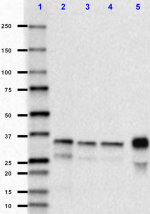
Western blot of purified anti-Apo E antibody (clone D6E10). ... 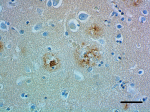
IHC staining of purified anti-Apo E antibody (clone D6E10) o... 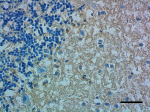
IHC staining of purified anti-Apo E antibody (clone D6E10) o... 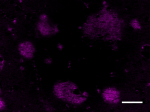
IHC staining of purified anti-Apo E antibody (clone D6E10) a... 
HepG2 cells (negative cell line, panel A) and HeLa cells (po... -
Biotin anti-Apo E
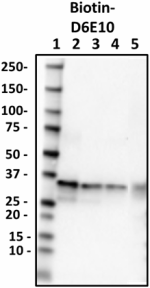
Western blot of Biotin anti-Apo E antibody (clone D6E10). La... -
Alexa Fluor® 647 anti-ApoE Antibody

IHC staining with Alexa Fluor® 647 anti-ApoE (clone D6E10) o... 
HeLa cells (negative cell line, panel A) and HepG2 cells (po...


Follow Us