 Login / Register


 United States ($) USD
 Austria (€) EUR
 Belgium (€) EUR
 Denmark (DKK) DKK
 Finland (€) EUR
 France (€) EUR
 Germany (€) EUR
 Ireland (€) EUR
 Japan (¥) JPY
 Luxembourg (€) EUR
 Netherlands (€) EUR
 Norway (NOK) NOK
 Sweden (SEK) SEK
 Switzerland (CHF) CHF
 United Kingdom (£) GBP

- Clone
- GK1.5 (See other available formats)
- Regulatory Status
- RUO
- Other Names
- L3T4, T4
- Isotype
- Rat IgG2b, κ
- Ave. Rating
- Submit a Review
- Product Citations
- publications
-

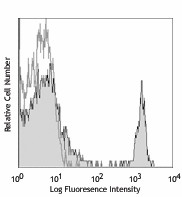
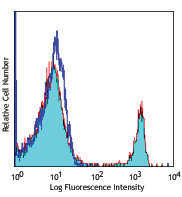
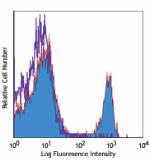
C57BL/6 mouse splenocytes were stained with CD4 (clone GK1.5) PE (filled histogram) or rat IgG2b, κ PE isotype control (open histogram). -

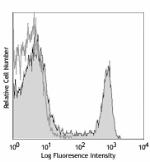
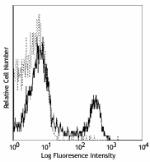
C57BL/6 mouse splenocytes were stained with CD4 (clone GK1.5) PE (solid line) or rat IgG2b, κ PE isotype control (dashed line).
| Cat # | Size | Price | Quantity Check Availability | Save | ||
|---|---|---|---|---|---|---|
| 100407 | 50 µg | £18 | ||||
| 100408 | 200 µg | £50 | ||||
CD4 is a 55 kD protein also known as L3T4 or T4. It is a member of the Ig superfamily, primarily expressed on most thymocytes, a subset of T cells, and weakly on macrophages and dendritic cells. It acts as a coreceptor with the TCR during T cell activation and thymic differentiation by binding MHC class II and associating with the protein tyrosin kinase, lck.
Product DetailsProduct Details
- Verified Reactivity
- Mouse
- Antibody Type
- Monoclonal
- Host Species
- Rat
- Immunogen
- Mouse CTL clone V4
- Formulation
- Phosphate-buffered solution, pH 7.2, containing 0.09% sodium azide.
- Preparation
- The antibody was purified by affinity chromatography, and conjugated with PE under optimal conditions.
- Concentration
- 0.2 mg/ml
- Storage & Handling
- The CD4 antibody solution should be stored undiluted between 2°C and 8°C, and protected from prolonged exposure to light. Do not freeze.
- Application
-
FC - Quality tested
- Recommended Usage
-
Each lot of this antibody is quality control tested by immunofluorescent staining with flow cytometric analysis. For flow cytometric staining, the suggested use of this reagent is ≤0.25 µg per million cells in 100 µl volume. It is recommended that the reagent be titrated for optimal performance for each application.
- Excitation Laser
-
Blue Laser (488 nm)
Green Laser (532 nm)/Yellow-Green Laser (561 nm)
- Application Notes
-
Additional reported applications (for the relevant formats) include: blocking of CD4+ T cell activation1,4,11, thymocyte costimulation3, in vitro and in vivo depletion2,5-8, blocking of egg-sperm cell adhesion1,4, immunohistochemical staining of acetone-fixed frozen sections9,10, immunoprecipitation1,2, and spatial biology (IBEX)12,13. The GK1.5 antibody is able to block CD4 mediated cell adhesion and T cell activation. Binding of GK1.5 antibody to CD4 T cells can be blocked by RM4-5 antibody, but not RM4-4 antibody. For in vivo studies or highly sensitive assays, we recommend Ultra-LEAF™ purified antibody (Cat. No. 100442) with a lower endotoxin limit than standard LEAF™ purified antibodies (Endotoxin < 0.01 EU/µg).
-
Application References
(PubMed link indicates BioLegend citation) -
- Dialynas DP, et al. 1983. J. Immunol. 131:2445. (Block, IP)
- Dialynas DP, et al. 1983. Immunol. Rev. 74:29. (IP, Deplete)
- Wu L, et al. 1991. J. Exp. Med. 174:1617. (Costim)
- Godfrey DI, et al. 1994. J. Immunol. 152:4783. (Block)
- Gavett SH, et al. 1994. Am. J. Respir. Cell. Mol. Biol. 10:587. (Deplete)
- Schuyler M, et al. 1994. Am. J. Respir. Crit. Care Med. 149:1286. (Deplete)
- Ghobrial RR, et al. 1989. Clin. Immunol. Immunopathol. 52:486. (Deplete)
- Israelski DM, et al. 1989. J. Immunol. 142:954. (Deplete)
- Zheng B, et al. 1996. J. Exp. Med. 184:1083. (IHC)
- Frei K, et al. 1997. J. Exp. Med. 185:2177. (IHC)
- Felix NJ, et al. 2007. Nat. Immunol. 8:388. (Block)
- Radtke AJ, et al. 2020. Proc Natl Acad Sci U S A. 117:33455-65. (SB) PubMed
- Radtke AJ, et al. 2022. Nat Protoc. 17:378-401. (SB) PubMed
- Product Citations
-
- RRID
-
AB_312692 (BioLegend Cat. No. 100407)
AB_312693 (BioLegend Cat. No. 100408)
Antigen Details
- Structure
- Ig superfamily, 55 kD
- Distribution
-
Majority of thymocytes, T cell subset
- Function
- TCR co-receptor, T cell activation
- Ligand/Receptor
- MHC class II molecule
- Cell Type
- Dendritic cells, T cells, Thymocytes, Tregs
- Biology Area
- Immunology
- Molecular Family
- CD Molecules
- Antigen References
-
1. Barclay A, et al. 1997. The Leukocyte Antigen FactsBook Academic Press.
2. Bierer BE, et al. 1989. Annu. Rev. Immunol. 7:579.
3. Janeway CA. 1992. Annu. Rev. Immunol. 10:645. - Gene ID
- 12504 View all products for this Gene ID
- UniProt
- View information about CD4 on UniProt.org
Related Pages & Pathways
Pathways


Related FAQs
- I am unable to see expression of T cell markers such as CD3 and CD4 post activation.
- TCR-CD3 complexes on the T-lymphocyte surface are rapidly downregulated upon activation with peptide-MHC complex, superantigen or cross-linking with anti-TCR or anti-CD3 antibodies. PMA/Ionomycin treatment has been shown to downregulate surface CD4 expression. Receptor downregulation is a common biological phenomenon and so make sure that your stimulation treatment is not causing it in your sample type.
- What type of PE do you use in your conjugates?
- We use R-PE in our conjugates.
Other Formats
View All CD4 Reagents Request Custom ConjugationCustomers Also Purchased
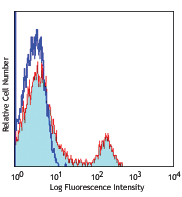
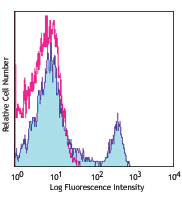
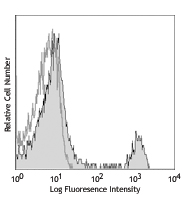
Compare Data Across All Formats
This data display is provided for general comparisons between formats.
Your actual data may vary due to variations in samples, target cells, instruments and their settings, staining conditions, and other factors.
If you need assistance with selecting the best format contact our expert technical support team.
-
PE/Cyanine7 anti-mouse CD4
C57BL/6 mouse splenocytes were stained with CD4 (clone GK1.5... -
APC/Cyanine7 anti-mouse CD4
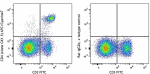
C57BL/6 mouse splenocytes were stained with CD3 FITC and CD4... -
Brilliant Violet 711™ anti-mouse CD4
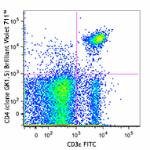
C57BL/6 mouse splenocytes were stained with CD3ε FIT... 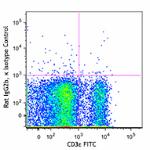
-
Brilliant Violet 510™ anti-mouse CD4
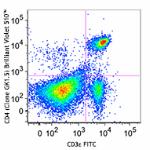
C57BL/6 mouse splenocytes were stained with CD3ε FITC and CD... 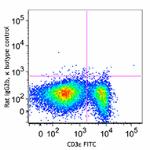
-
Brilliant Violet 605™ anti-mouse CD4
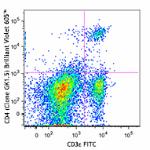
C57BL/6 mouse splenocytes were stained with CD3ε FIT... 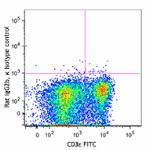
-
Brilliant Violet 785™ anti-mouse CD4
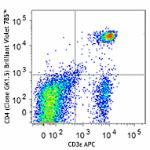
C57BL/6 mouse splenocytes were stained with CD3ε APC... 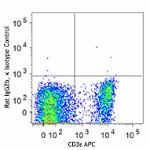
-
PE/Dazzle™ 594 anti-mouse CD4
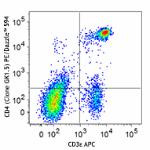
C57BL/6 mouse splenocytes were stained with CD3ε APC... 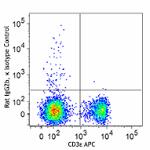
-
APC/Fire™ 750 anti-mouse CD4
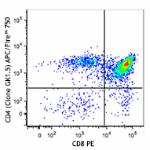
C57BL/6 mouse thymocytes were stained with CD8 PE and CD4 (c... 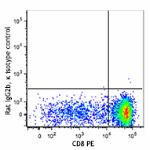
-
GoInVivo™ Purified anti-mouse CD4
-
Brilliant Violet 750™ anti-mouse CD4
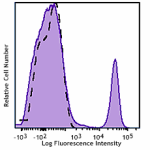
C57BL/6 mouse splenocytes were stained with CD4 (clone GK1.5... -
Brilliant Violet 650™ anti-mouse CD4
C57BL/6 mouse splenocytes were stained with CD3ε FITC and CD... -
Spark Blue™ 550 anti-mouse CD4
C57BL/6 mouse splenocytes were stained with CD4 (clone GK1.5... -
Spark NIR™ 685 anti-mouse CD4
C57BL/6 mouse splenocytes were stained with CD4 (clone GK1.5... -
KIRAVIA Blue 520™ anti-mouse CD4
C57BL/6 mouse splenocytes were stained with CD3 APC and CD4 ... -
PE/Fire™ 640 anti-mouse CD4
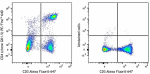
C57BL/6 mouse splenocytes were stained with CD3 Alexa Fluor®... -
APC/Fire™ 810 anti-mouse CD4
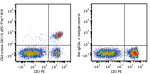
C57BL/6 splenocytes were stained with CD3 PE and CD4 (clone ... -
PE/Fire™ 700 anti-mouse CD4
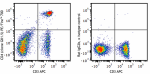
C57BL/6 mouse splenocytes were stained with anti-mouse CD3 A... -
APC anti-mouse CD4
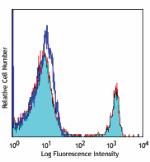
C57BL/6 mouse splenocytes were stained with CD4 (clone GK1.5... -
Biotin anti-mouse CD4
C57BL/6 mouse splenocytes were stained with biotinylated CD4... -
FITC anti-mouse CD4
C57BL/6 mouse splenocytes were stained with CD4 (clone GK1.5... -
PE anti-mouse CD4
C57BL/6 mouse splenocytes were stained with CD4 (clone GK1.5... 
C57BL/6 mouse splenocytes were stained with CD4 (clone GK1.5... -
PE/Cyanine5 anti-mouse CD4
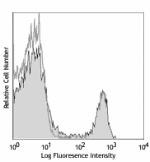
C57BL/6 mouse splenocytes were stained with CD4 (clone GK1.5... -
Purified anti-mouse CD4
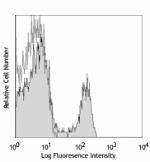
BALB/c mouse splenocytes were stained with purified CD4 (clo... -
Alexa Fluor® 647 anti-mouse CD4
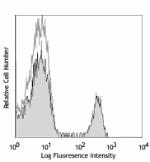
C57BL/6 mouse splenocytes were stained with CD4 (clone GK1.5... 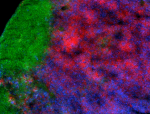
C57BL/6 mouse frozen lymph node section was fixed with 4% pa... -
Alexa Fluor® 488 anti-mouse CD4
C57BL/6 mouse splenocytes were stained with CD4 (clone GK1.5... 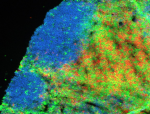
C57BL/6 mouse frozen lymph node section was fixed with 4% pa... -
Pacific Blue™ anti-mouse CD4
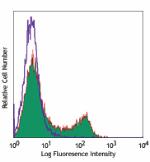
C57BL/6 mouse splenocytes were stained with CD4 (clone GK1.5... -
Alexa Fluor® 700 anti-mouse CD4
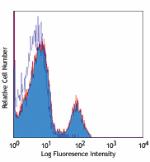
C57BL/6 mouse splenocytes stained with CD4 (clone GK1.5) Ale... -
PerCP anti-mouse CD4
C57BL/6 mouse splenocytes were stained with CD4 (clone GK1.5... -
PerCP/Cyanine5.5 anti-mouse CD4
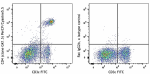
C57BL/6 mouse splenocytes were stained with CD3e FITC and CD... -
Brilliant Violet 421™ anti-mouse CD4
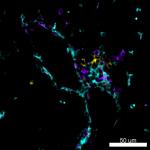
Confocal image of C57BL/6 mouse liver sample acquired using ... 
C57BL/6 mouse splenocytes were fixed with 2% paraformaldehyd... 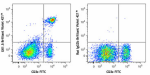
C57BL/6 mouse splenocytes were stained with CD3ε FITC and CD... -
Ultra-LEAF™ Purified anti-mouse CD4
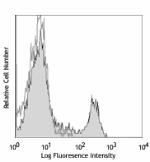
C57BL/6 mouse splenocytes were stained with LEAF™ purified C... -
Alexa Fluor® 594 anti-mouse CD4
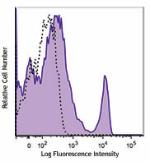
C57BL/6 mouse splenocytes were stained with CD4 (clone GK1.5... 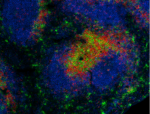
C57BL/6 mouse frozen lymph node section was fixed with 4% pa... 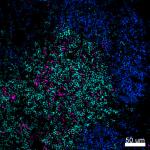
Confocal image of C57BL/6 mouse spleen sample acquired using... -
Spark Violet™ 538 anti-mouse CD4
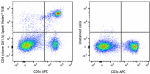
C57BL/6 mouse splenocytes were stained with anti-mouse CD3ε ... -
Spark YG™ 593 anti-mouse CD4
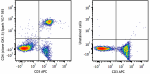
C57BL/6 mouse splenocytes cells were stained with anti-mouse... -
Spark Blue™ 574 anti-mouse CD4 Antibody
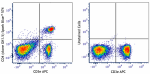
C57BL/6 splenocytes were stained with anti-mouse CD3e APC an... -
Spark UV™ 387 anti-mouse CD4
C57BL/6 mouse splenocytes were stained with anti-mouse CD3ε ... -
Spark Blue™ 515 anti-mouse CD4
C57BL/6 mouse splenocytes were stained with anti-mouse CD3 A... -
Spark PLUS UV395™ anti-mouse CD4

C57BL/6 mouse splenocytes were stained with anti-mouse CD3ε ... -
Spark Red™ 718 anti-mouse CD4 (Flexi-Fluor™)
-
PerCP/Fire™ 806 anti-mouse CD4 Antibody

C57BL/6 mouse splenocytes were stained with anti-mouse CD3ε ... -
PerCP/Fire™ 780 anti-mouse CD4 Antibody

C57BL/6 mouse splenocytes were stained with anti-mouse CD3ε ... -
Spark YG™ 581 anti-mouse CD4 (Flexi-Fluor™)
-
StarBright UltraViolet 795 anti-mouse CD4

C57BL/6 mouse splenocytes were stained with anti-mouse CD3ε ... -
Spark PLUS V475™ anti-mouse CD4

C57BL/6 mouse splenocytes were stained with anti-mouse CD3ε ... -
Spark PLUS B488™ anti-mouse CD4

C57BL/6 mouse splenocytes were stained with anti-mouse CD3ε ... -
Spark PLUS YG581™ anti-mouse CD4

C57BL/6 mouse splenocytes were stained with anti-mouse CD3ε ... -
PE/Fire™ 744 anti-mouse CD4

C57BL/6 mouse splenocytes were stained with anti-mouse CD3ε ...


Follow Us