 Login / Register


 United States ($) USD
 Austria (€) EUR
 Belgium (€) EUR
 Denmark (DKK) DKK
 Finland (€) EUR
 France (€) EUR
 Germany (€) EUR
 Ireland (€) EUR
 Japan (¥) JPY
 Luxembourg (€) EUR
 Netherlands (€) EUR
 Norway (NOK) NOK
 Sweden (SEK) SEK
 Switzerland (CHF) CHF
 United Kingdom (£) GBP

- Clone
- BY88 (See other available formats)
- Workshop
- V BP173
- Other Names
- Ber-H2, Ki-1, TNFRSF8
- Isotype
- Mouse IgG1, κ
- Ave. Rating
- Submit a Review
- Product Citations
- publications

-

Typical results from HDLM-2 cells (a human lymphoma cell line) stained either with BY88 FITC used at 5 µL/test (filled histogram) or with an isotype control (open histogram).
| Cat # | Size | Price | Quantity Check Availability | Save | ||
|---|---|---|---|---|---|---|
| 260522 | 100 tests | 188€ | ||||
CD30, also known as Ki-1 antigen, lymphoid activation antigen CD30, and tumor necrosis factor receptor superfamily member 8 is a type I transmembrane receptor that contains four TNF receptor domains with an approximate molecular weight of 64 kD. CD30 is highly expressed on Hodgkins and Reed-Sternberg cells as well as activated, but not resting, T and B cells. CD30 has been shown to interact with a number of proteins including TRAF1, TRAF2, TRAF3, TRAF5, NPM-ALK, TRAF-interacting protein, and CD30 ligand (CD153). Signaling through CD30 is thought to limit the proliferative potential of autoreactive CD8 effector T cells and protect against autoimmunity.
Product DetailsProduct Details
- Reactivity
- Human
- Antibody Type
- Monoclonal
- Host Species
- Mouse
- Immunogen
- Recombinant human CD30 boosted with THP-1 cell line
- Formulation
- Phosphate-buffered solution, pH 7.2, containing 0.09% sodium azide and 0.2% (w/v) BSA (origin USA) and a stabilizer
- Preparation
- The antibody was purified by affinity chromatography and conjugated with FITC under optimal conditions.
- Concentration
- 400 µg/mL
- Storage & Handling
- The antibody solution should be stored undiluted between 2°C and 8°C, and protected from prolonged exposure to light. Do not freeze.
- Application
-
FC - Quality tested
- Recommended Usage
-
Each lot of this antibody is quality control tested by immunofluorescent staining with flow cytometric analysis. For flow cytometric staining, the suggested use of this reagent is 5 µL per million cells in 100 µL staining volume or 5 µL per 100 µL of whole blood. It is recommended that the reagent be titrated for optimal performance for each application.
- Excitation Laser
-
Blue Laser (488 nm)
- Application Notes
-
Additional reported application: in combination with IL-2 and PMA to induce T cell clone proliferation.
-
Application References
(PubMed link indicates BioLegend citation) -
- Leca G, et al. 1994. Cell. Immunol. 156:230.
- Disclaimer
-
GMP RUO Flow Cytometry Antibodies. BioLegend GMP RUO fluorophore conjugated antibodies are manufactured in a dedicated GMP facility and compliant with ISO 13485:2016. For research use only. Not for use in diagnostic or therapeutic procedures. Our processes include:
- Batch-to-batch consistency
- Material traceability
- Documented procedures
- Documented employee training
- Equipment maintenance and monitoring records
- Lot-specific certificates of analysis
- Quality audits per ISO 13485:2016
- QA review of released products
Antigen Details
- Structure
- Type I transmembrane receptor and member of the TNF receptor superfamily that contains 4 TNF receptor domains; predicted molecular weight approximately 64 kD
- Distribution
-
Highly expressed on Hodgkins and Reed-Sternberg cells and activated, but not resting, T cells and B cells.
- Function
- Signaling through CD30 is thought to limit the proliferative potential of autoreactive CD8 effector T cells and protect against autoimmunity.
- Interaction
- TRAF1, TRAF2, TRAF3, TRAF5, NPM-ALK, TRAF-interacting protein, CD30 ligand (CD153)
- Ligand/Receptor
- CD30 Ligand (CD153)
- Cell Type
- B cells, Embryonic Stem Cells, Tregs
- Biology Area
- Immunology, Stem Cells
- Molecular Family
- CD Molecules
- Antigen References
-
1. Durkop H, et al. 1992. Cell 68:421.
2. Aizawa S, et al. 1997. J. Biol. Chem. 272:2042.
3. Stein H, et al. 1982. Int. J. Cancer 30:445. - Gene ID
- 943 View all products for this Gene ID
- UniProt
- View information about CD30 on UniProt.org
Related Pages & Pathways
Pathways


Related FAQs
Other Formats
View All CD30 Reagents Request Custom Conjugation| Description | Clone | Applications |
|---|---|---|
| PerCP/Cyanine5.5 anti-human CD30 | BY88 | ICFC |
| TotalSeq™-A0028 anti-human CD30 | BY88 | PG |
| APC/Fire™ 750 anti-human CD30 | BY88 | FC |
| PE/Cyanine7 anti-human CD30 | BY88 | FC |
| TotalSeq™-C0028 anti-human CD30 | BY88 | PG |
| TotalSeq™-B0028 anti-human CD30 | BY88 | PG |
| FITC anti-human CD30 | BY88 | FC |
| Purified anti-human CD30 | BY88 | FC |
| PE anti-human CD30 | BY88 | FC |
| APC anti-human CD30 | BY88 | FC |
| TotalSeq™-D0028 anti-human CD30 | BY88 | PG |
| APC anti-human CD30 | BY88 | FC |
| FITC anti-human CD30 | BY88 | FC |
| PE anti-human CD30 | BY88 | FC |
| GMP FITC anti-human CD30 | BY88 | FC |
Compare Data Across All Formats
This data display is provided for general comparisons between formats.
Your actual data may vary due to variations in samples, target cells, instruments and their settings, staining conditions, and other factors.
If you need assistance with selecting the best format contact our expert technical support team.
-
PerCP/Cyanine5.5 anti-human CD30
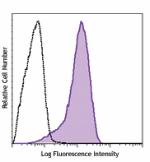
HuT-78 cells (Human T lymphoma cell line) were stained with ... -
TotalSeq™-A0028 anti-human CD30
-
APC/Fire™ 750 anti-human CD30
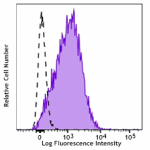
HuT-78 cells (Human T lymphoma cell line) were stained with ... -
PE/Cyanine7 anti-human CD30
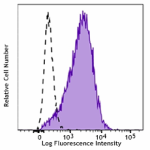
HuT-78 cells (Human T lymphoma cell line) were stained with ... -
TotalSeq™-C0028 anti-human CD30
-
TotalSeq™-B0028 anti-human CD30
-
FITC anti-human CD30
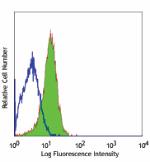
Human T lymphoma cell line Hut-78 stained with BY88 FITC -
Purified anti-human CD30
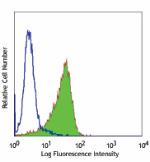
Human T lymphoma cell line Hut-78 stained with purified BY88... -
PE anti-human CD30
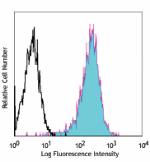
Human T lymphoma cell line Hut-78 stained with PE BY88 -
APC anti-human CD30
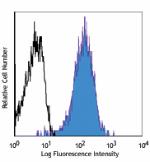
Human T lymphoma cell line Hut-78 stained with APC BY88 -
TotalSeq™-D0028 anti-human CD30
-
APC anti-human CD30
-
FITC anti-human CD30

Typical results from HDLM-2 cells (a human lymphoma cell lin... -
PE anti-human CD30

Typical results from HDLM-2 cells (a human lymphoma cell lin... -
GMP FITC anti-human CD30

Typical results from HDLM-2 cells (a human lymphoma cell lin...


Follow Us